
The global demand for frozen fruit continues to grow as consumers, food manufacturers, hotels, restaurants, and beverage companies look for convenient and high-quality fruit products throughout the year. For entrepreneurs and food processors, starting a frozen fruit processing business can be an attractive investment opportunity.
A well-designed frozen fruit processing business plan should cover raw material sourcing, processing technology, equipment selection, factory layout, packaging, cold storage, labor, investment costs, and sales channels.
This guide explains how to start a frozen fruit processing business and what equipment is needed to build an efficient commercial frozen fruit production line.
1. What Is a Frozen Fruit Processing Business?
A frozen fruit processing business purchases fresh fruits and processes them into frozen products for retail, foodservice, and industrial applications.
Depending on the fruit and target market, the final products may include:
- Frozen mango chunks
- Frozen pineapple chunks
- Frozen strawberries
- Frozen blueberries
- Frozen peaches
- Frozen bananas
- Frozen mixed fruits
- Frozen fruit slices
- Frozen fruit cubes
Frozen fruit can extend the shelf life of fresh produce while maintaining much of its original flavor, color, and nutritional value when proper processing and freezing technologies are used.
For commercial production, an integrated frozen fruit processing line can automate washing, sorting, peeling, cutting, freezing, and packaging processes.
2. Why Start a Frozen Fruit Processing Business?
Before investing in a frozen fruit processing plant, it is important to understand the market opportunity.
Year-Round Fruit Supply
Many fruits are highly seasonal. Freezing allows processors to purchase fruits during the harvest season and supply frozen products throughout the year.
Growing Demand for Convenience Foods
Frozen fruits are widely used by households, smoothie manufacturers, juice companies, bakeries, yogurt producers, hotels, restaurants, and food manufacturers.
Multiple Product Applications
One frozen fruit processing plant can potentially produce different products by changing cutting sizes, recipes, packaging formats, or processing parameters.
For example, mangoes can be processed into cubes, slices, or chunks for different customers.
Better Utilization of Seasonal Fruits
Processing fruits during peak harvest periods can help reduce post-harvest losses and create additional value from fresh agricultural products.
3. Frozen Fruit Processing Business Plan: Main Steps
A successful frozen fruit business requires more than simply purchasing a freezing machine. The entire processing workflow should be designed according to the raw material, capacity, final product, and target market.
A typical commercial frozen fruit processing process is:
Fresh Fruit → Receiving → Sorting → Washing → Peeling → Cutting → Inspection → Pre-Freezing/Freezing → Packaging → Metal Detection → Cold Storage → Distribution
The exact process varies depending on the type of fruit.
4. Step 1: Choose the Right Frozen Fruit Products
The first decision is which fruits you want to process.
Popular choices include:
- Mango
- Pineapple
- Strawberry
- Blueberry
- Peach
- Banana
- Raspberry
- Papaya
- Dragon fruit
- Mixed fruits
When selecting products, consider local fruit availability, purchase prices, seasonal production, export opportunities, processing difficulty, and customer demand.
For example, regions with abundant mango production may have strong potential for a frozen mango processing business, while tropical regions may be suitable for pineapple, banana, and papaya processing.
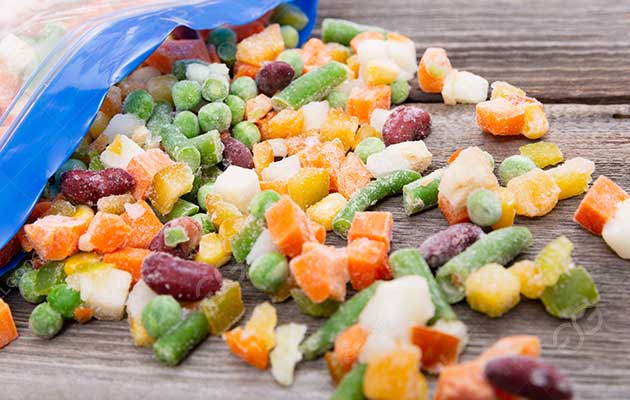
5. Step 2: Determine Your Production Capacity
Your production capacity directly affects equipment selection and investment.
Small processing businesses may start with several hundred kilograms per hour, while industrial factories can process several tons of fruit per hour.
When planning capacity, consider:
- Available raw fruit supply
- Expected daily production
- Number of working hours
- Seasonal production
- Target market
- Available factory space
- Budget
- Cold storage capacity
It is important to avoid selecting equipment based only on the maximum machine capacity. The entire processing line should be balanced so that washing, cutting, freezing, packaging, and storage capacities match each other.
6. Step 3: Select Frozen Fruit Processing Equipment
Equipment is one of the most important parts of a frozen fruit processing business plan.
A commercial frozen fruit production line may include the following machines.
Fruit Washing Machine
Fresh fruits need to be thoroughly cleaned before further processing. Bubble washers, spray washers, brush washers, and other cleaning systems can be selected according to the characteristics of the fruit.
Fruit Sorting Machine
Sorting removes damaged, rotten, immature, or unsuitable fruits before processing.
For large-scale production, an automatic fruit sorting machine can improve processing efficiency and reduce manual inspection requirements.
Fruit Peeling Machine
Some fruits require peeling before freezing.
For example, mango, pineapple, and certain stone fruits may require specialized peeling equipment.
Fruit Cutting Machine
The fruit can be cut into cubes, slices, chunks, or other shapes according to customer requirements.
Automatic cutting equipment provides more consistent product size and can significantly increase production efficiency.
Fruit Freezing Machine
Freezing is the core process of a frozen fruit processing plant.
IQF technology is commonly used for commercial frozen fruit products because individual pieces can be frozen separately instead of forming large blocks.
An IQF fruit freezing machine can help produce free-flowing frozen fruit suitable for retail packaging and food manufacturing.
Frozen Fruit Packaging Machine
After freezing, the products need to be accurately weighed and packed.
Depending on the target market, frozen fruit can be packaged in retail bags, bulk bags, cartons, or other formats.
Automatic weighing and packaging systems can improve packaging accuracy and reduce labor costs.
Cold Storage System
Frozen products need to be stored at an appropriate low temperature before transportation.
Therefore, cold storage capacity should be considered when designing the complete frozen fruit processing plant.
7. Frozen Fruit Processing Line Layout
A properly designed factory layout can improve material flow and reduce unnecessary transportation.
A typical layout may include:
Raw Fruit Receiving Area
↓
Washing & Sorting Area
↓
Peeling & Cutting Area
↓
Inspection Area
↓
Freezing Area
↓
Packaging Area
↓
Cold Storage
↓
Finished Product Dispatch
The production area should also consider personnel movement, sanitation, drainage, water supply, electricity, refrigeration systems, and food safety requirements.
For large projects, working with an experienced frozen fruit processing equipment supplier can help optimize the complete plant layout.
8. How Much Does It Cost to Start a Frozen Fruit Processing Business?
The investment required depends heavily on the production capacity and level of automation.
Major cost categories include:
| Investment Item | Main Factors |
|---|---|
| Fruit processing equipment | Capacity, automation, machine configuration |
| IQF freezer | Freezing capacity and refrigeration requirements |
| Packaging equipment | Package size and automation level |
| Cold storage | Storage capacity and temperature |
| Factory | Building size and location |
| Utilities | Electricity, water, refrigeration, drainage |
| Labor | Production scale and automation |
| Raw materials | Fruit type and seasonal prices |
| Packaging materials | Bag, carton, label, etc. |
| Transportation | Local and export distribution |
For this reason, there is no single standard price for a frozen fruit processing plant.
A more accurate investment estimate should be based on your fruit type, processing capacity, product specifications, automation level, and target market.
9. How to Improve Frozen Fruit Processing Profitability
Equipment investment is only one part of the business. Profitability depends on how efficiently the entire operation is managed.
Purchase Fruits During the Harvest Season
Buying suitable-quality fruits during the peak harvest period may help reduce raw material costs.
Reduce Processing Loss
Efficient washing, peeling, cutting, and sorting systems can help improve raw material utilization.
Use Appropriate Freezing Technology
Fast and controlled freezing can help maintain product quality and reduce problems such as excessive ice formation and product clumping.
Develop Multiple Products
Instead of relying on one product, processors can develop different fruit formats and packaging sizes.
For example:
- Frozen mango cubes
- Frozen mango slices
- Frozen mango chunks
- Frozen mixed fruit
- Bulk frozen mango for food manufacturers
Increase Automation
Automatic sorting, cutting, freezing, weighing, and packaging equipment can reduce manual labor and improve production consistency, especially for medium- and large-scale factories.
10. Frozen Fruit Business Target Markets
Frozen fruits can be sold through several channels.
Retail Market
Retail consumers purchase frozen fruits for smoothies, desserts, breakfast foods, and home cooking.
Foodservice Market
Hotels, restaurants, cafes, bakeries, and catering companies use frozen fruits as convenient ingredients.
Food Manufacturing
Frozen fruits are also used by manufacturers producing:
- Fruit juice
- Smoothies
- Yogurt
- Ice cream
- Jam
- Bakery products
- Desserts
- Fruit beverages
Export Market
Countries with strong fruit production can establish frozen fruit processing plants to add value to agricultural products and develop export-oriented businesses.
11. Food Safety and Quality Control
Food safety should be incorporated into the frozen fruit business plan from the beginning.
Important control points include:
- Raw material inspection
- Washing water quality
- Hygienic processing conditions
- Equipment sanitation
- Temperature control
- Foreign material detection
- Packaging integrity
- Cold chain management
- Finished product inspection
Food-grade stainless steel equipment, hygienic factory design, proper cleaning procedures, and temperature monitoring can help improve overall food safety.
12. Why Choose a Complete Frozen Fruit Processing Line?
For businesses planning medium- or large-scale production, purchasing individual machines may not always be the most efficient approach.
A complete frozen fruit processing line can integrate:
Washing + Sorting + Peeling + Cutting + Inspection + Freezing + Packaging + Cold Storage
An integrated solution can help improve production efficiency, simplify operation, and create a smoother material flow.
The processing line can also be customized according to different fruits and production requirements.
For example, a frozen mango line may require mango peeling and cutting equipment, while a strawberry processing line may focus more on washing, sorting, inspection, and IQF freezing.
13. Start Your Frozen Fruit Processing Business
Starting a frozen fruit processing business requires careful planning, from raw fruit sourcing to final product distribution.
The key is to build a processing system that matches your raw materials, production capacity, product specifications, investment budget, and target market.
If you are planning a new frozen fruit processing plant, GELGOOG can provide customized fruit processing machinery and complete processing solutions, including equipment selection, production line design, factory layout, installation, commissioning, and technical support.